

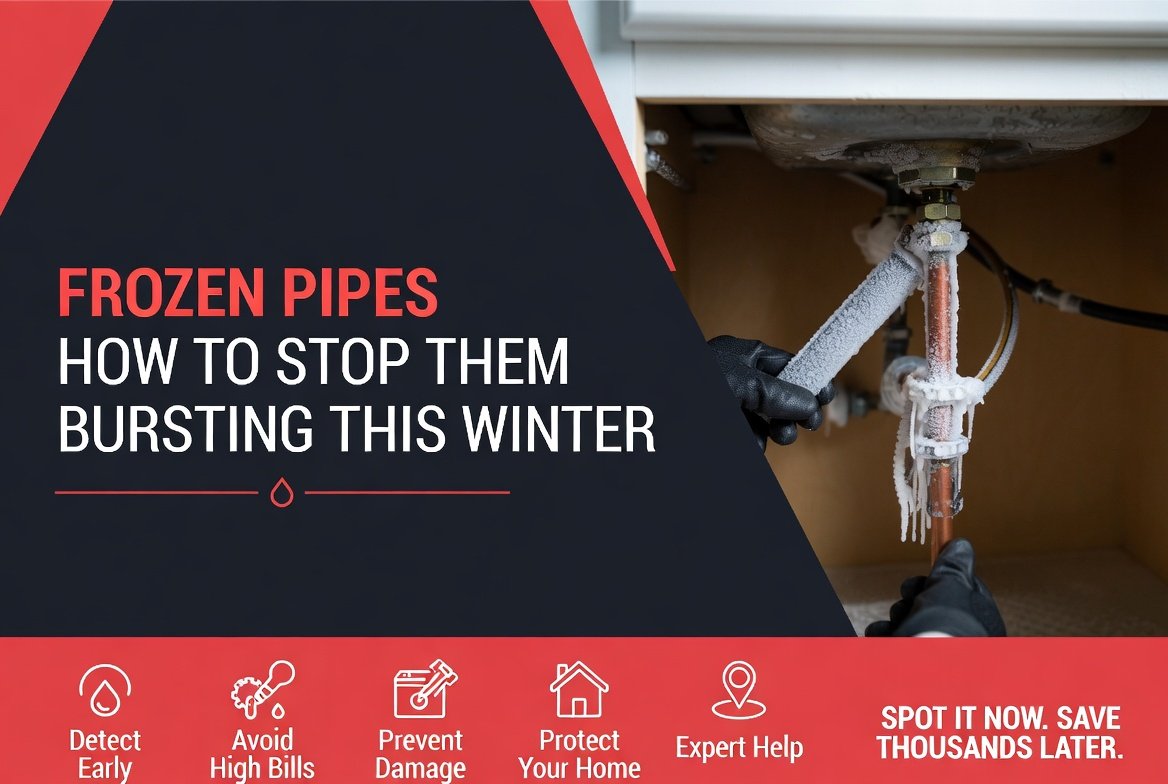
Frozen Pipes: How to Stop Them Bursting This Winter
Frozen Pipes: How to Stop Them Bursting This Winter
When temperatures drop, frozen pipes become one of the most common winter plumbing problems. Water expands as it freezes, and that expansion puts serious pressure on your pipework. Left unchecked, a frozen pipe can crack or burst entirely.
The good news? A few simple habits can massively reduce your risk. Here’s what actually works.
1. Know Which Pipes Are at Risk
Not every pipe freezes equally. Pipes in unheated spaces are the most vulnerable — think lofts, garages, and under suspended or timber floors. Pipes running along external walls are also more exposed to the cold.
What to do: Take a walk around your home and identify which pipes sit in these colder areas. Knowing your risk points is the first step.
2. Keep Your Heating On Low, Even When You’re Out
It’s tempting to switch the heating off completely when you’re away, but this raises your risk significantly. A consistent low temperature keeps pipes just warm enough to avoid freezing.
What to do: Set your thermostat to around 12-15°C if you’re heading away for a few days, rather than turning it off entirely.
3. Insulate Exposed Pipework
Pipe insulation (sometimes called lagging) is cheap, and it makes a real difference. Wrapping exposed pipes, especially in lofts and garages, adds a protective layer against the cold.
What to do: Focus on pipes in unheated areas first. This is one of the most cost-effective preventative steps you can take.
4. Let Cold Taps Drip on Very Cold Nights
Moving water freezes less easily than still water. On especially cold nights, letting a cold tap drip slightly keeps water moving through the pipe and reduces the chance of a freeze.
What to do: This works best on pipes you already know are at higher risk, rather than every tap in the house.
5. Seal Draughts Near Pipework
Cold air sneaking in through gaps and cracks can drop the temperature around your pipes fast. Draught-proofing isn’t just about comfort — it protects your plumbing too.
What to do: Check around loft hatches, airbricks, and any gaps near where pipework runs.
What If a Pipe Freezes Anyway?
If you notice reduced water flow from a tap, that’s often an early sign of a freeze forming somewhere in the system. Don’t ignore it. Turn off your stopcock as a precaution, and avoid using a naked flame to try thawing the pipe yourself. Gentle heat, like a hairdryer on a low setting, can sometimes help, but if you’re unsure, it’s safer to call a professional before the pipe cracks.
Worried About Your Pipes This Winter?
If you’re not sure which pipes in your home are at risk, or you’d like some insulation work done before the cold really sets in, get in touch. We can help identify vulnerable pipework, including runs under suspended and timber floors, before it becomes a costly problem.